
Seeking Accountability from Exile in Canada
Tawfeek Al-Mansouri
Yemeni journalist and human rights defender
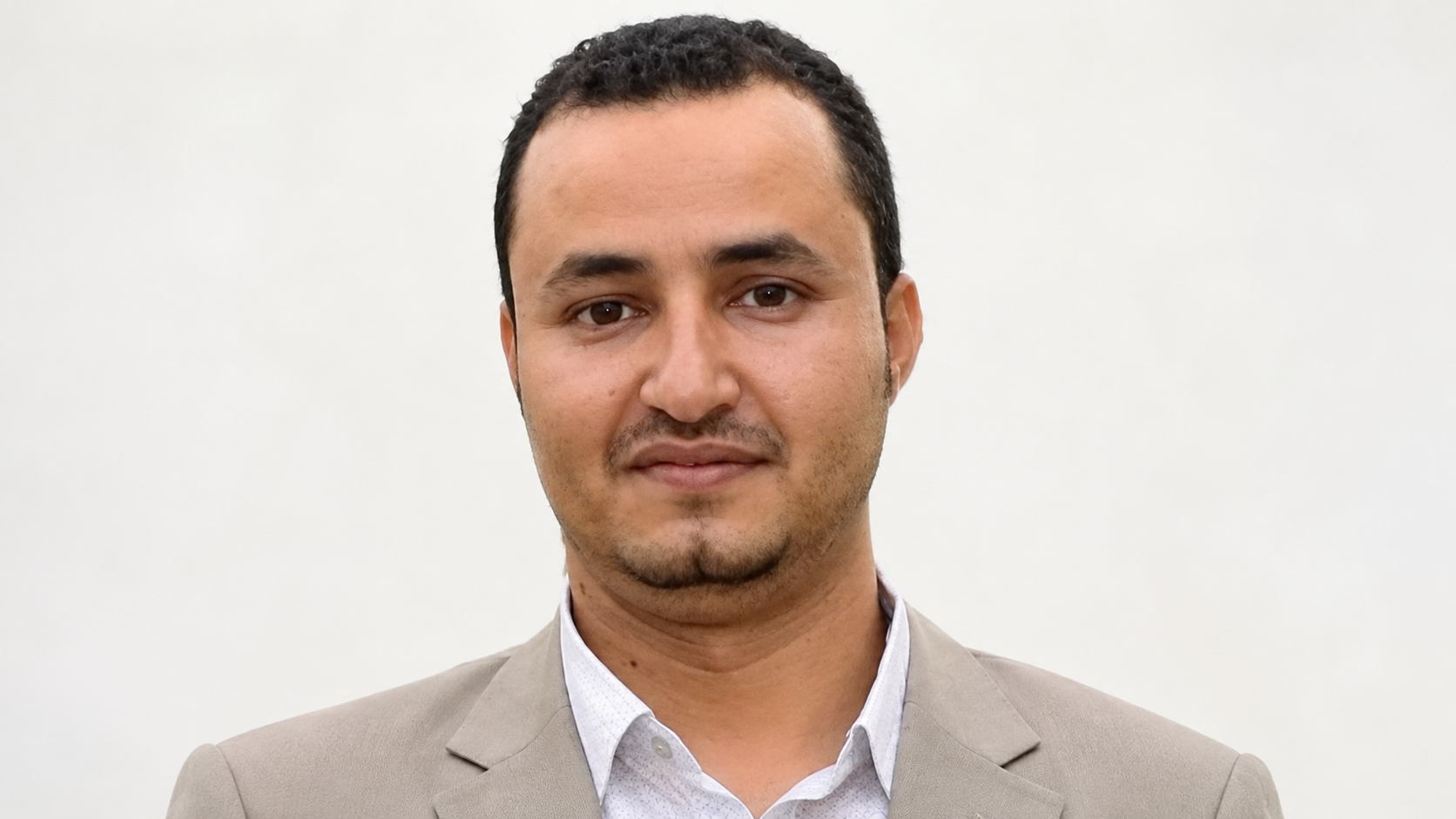
When I arrived in Canada in 2025, I carried very little. But I brought a file. It held the record of eight years of my life: reports from United Nations experts, letters from human rights organizations, the names of witnesses, the marks of torture on my own body, and the names of the men who put me in a cell for doing my work as a journalist.
I believed that file mattered. Canada had already spoken about my case. In 2020, it joined five other governments in publicly condemning the death sentence a Houthi court had passed against me and three of my colleagues for our journalism. I believed that a free country, with working courts and a real respect for human rights, would offer me a door: a place to bring my case, and someone whose job it was to listen.
I was wrong. Not because anyone here was cruel to me. People have been kind. I was wrong because the door I was looking for does not really exist.
I call this the justice gap. It is the distance between holding overwhelming evidence of a grave crime and having any real way to act on it.
I tried to pursue justice here. I was advised to consult a lawyer who specialized in cases like mine. His answer stayed with me. Canada, he explained, is not the United States; it almost never puts foreign perpetrators on trial for crimes committed on another country's soil. He did not say it with anger or regret. He said it as a simple fact of how the system works.
On paper, the world has built an impressive set of rules against torture and arbitrary detention. In practice, a survivor in exile learns quickly how narrow the openings are. A national court will usually explain that it has no jurisdiction over crimes committed in another country by people who are not present here. Where the responsible party is a state, the principle of state immunity often closes the case before it begins. And even if a court agreed to hear me, no judgment could be enforced against men who remain in Sanaa.
So the evidence sits in the file. The perpetrators continue their work. And the survivor is left with a painful realization: the problem was never a lack of proof. The problem is that accountability, for crimes like these, is still treated as optional.
In my case, the perpetrators have names. Torture in those prisons was a system: interrogators, guards, and senior leaders carried it out, and officials ordered it and protected one another. One of them is Abdulqader al-Murtadha, the Houthi official in charge of the prisoners' file. On 20 August 2022, he beat me himself, splitting open my head with a club and leaving a scar about eight centimetres long that I still carry. In December 2024, the United States Treasury sanctioned him for his direct role in torturing detainees in Houthi prisons, including journalists. He is one example among many. A major government has formally recognized the abuse. And still there is no court where I can bring my case against him or any of the others.
My aim is not to recount my suffering. It is to point at a gap that affects every survivor who reaches a safe country. When those who detain and torture journalists face no consequence, the message travels fast. It tells every authority watching that silencing a reporter carries no price. It tells the next journalist that the world will document their case and then move on.
I think often about the colleagues I left behind in those prisons. Some of them are still there. When I speak now, I speak for them as much as for myself. For a journalist who was punished for telling the truth, accountability is not revenge. It is the same work, continued by other means.
The encouraging part is that this gap can be narrowed, and the tools do not all depend on a courtroom that may never open.
The first is targeted sanctions. Countries including Canada have laws that allow them to name and sanction individuals responsible for gross human rights violations, freezing their assets and barring their entry. When one government acts, others can follow. A designation of this kind carries real consequences, and it does not require any court to accept a case.
The second is the United Nations system. A body such as the Working Group on Arbitrary Detention can examine a case and issue a formal finding that a detention violated international law. Such a finding cannot open a prison door on its own, but it creates an authoritative and permanent record. For a survivor, that record is not a small thing. It can be the difference between being believed and being forgotten.
The third is practical support for survivors themselves. Most of us arrive without the legal knowledge, the language, or the resources to follow any of these paths alone. Law clinics, human rights organizations, and universities can help a survivor turn a box of documents into a real submission. Host countries like Canada are well placed to offer that help, and to treat exiled journalists and defenders as partners in the work of accountability, not only as people in need of protection.
I did not come to Canada to stop working. I came to continue. My file is still here, and so am I. What I am asking for is simple: that the evidence survivors carry across borders is met with more than sympathy. Give it a door. Build the path that should already exist.
The truth survived eight years of prison. It can survive exile too. What it needs now is somewhere to go.