
Breaking Boundaries: My Story of Resistance
Soe Wuttye Htoo
Former Diplomat and Pro-Democracy Activist, Myanmar**
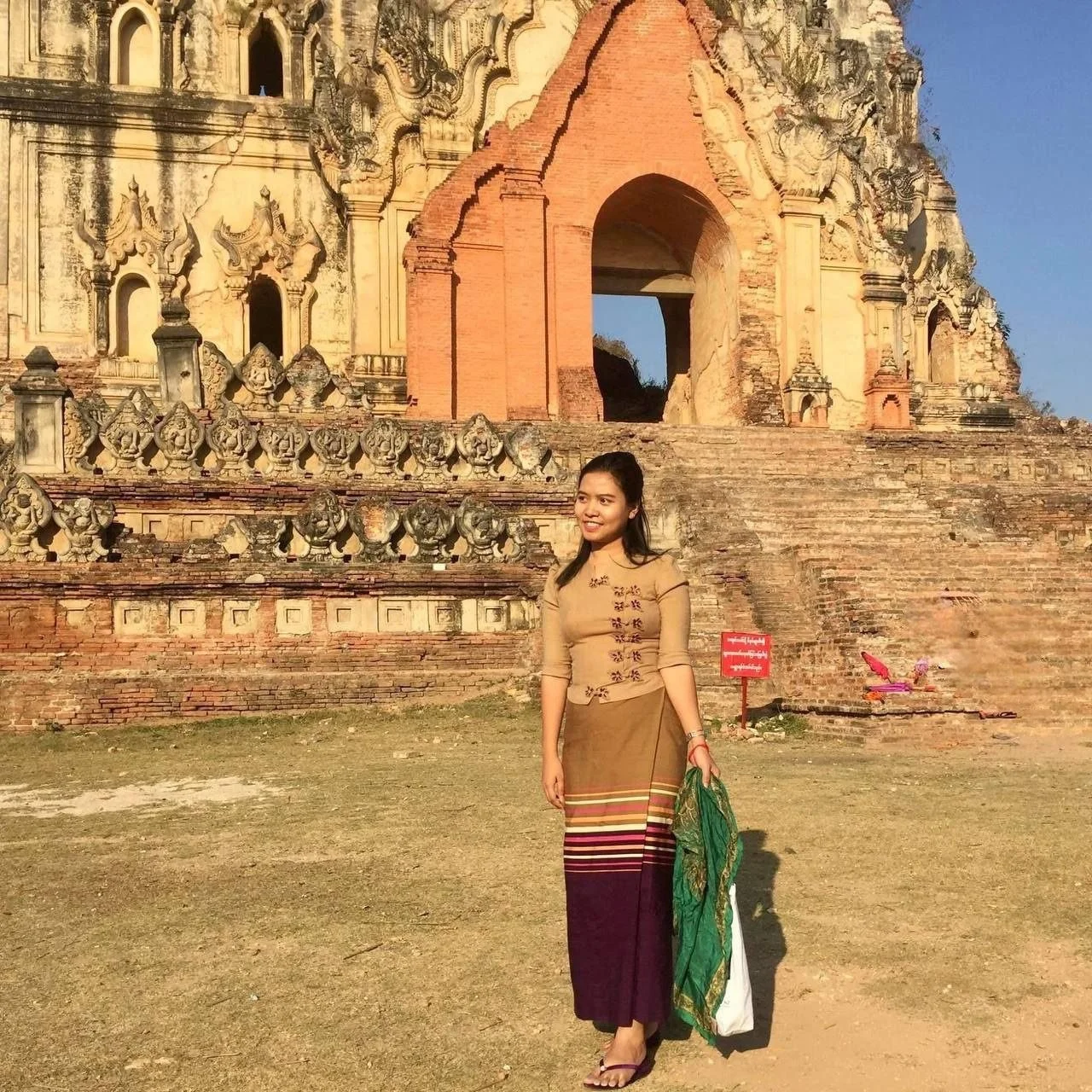
Soe Wuttye Htoo
I was born and raised in Myanmar (formerly Burma), a Southeast Asian country shaped by mountains in the north, forests in the east and west, and coastal shores in the south. It is rich in natural resources, including jade, sapphires, rubies, petroleum, natural gas, and rare earth minerals.
Although my homeland may appear peaceful, decades of conflict and repressive regimes tell a different story. After nearly 50 years of military rule, Myanmar began a transition toward democracy in 2011. The military-backed Union Solidarity and Development Party (USDP) won the 2010 general election, held under the military-drafted 2008 constitution and framed as a transition to democracy. Under this constitution, 25 percent of parliamentary seats were reserved for the military, and legislation favored military interests; nonetheless, many citizens initially welcomed the transition to democracy. The National League for Democracy (NLD) party, led by Nobel Peace Prize laureate Aung San Suu Kyi, boycotted the 2010 election while she remained under detention.
In the 2015 general election, the NLD party won overwhelmingly nationwide and became the first civilian government in over 50 years. The civilian-led period from 2016 to 2020 represented a moment of hope after decades of military rule since 1962, during which people experienced freedoms of speech, expression, and criticism, and gained a deeper understanding of democratic practice. Again, the NLD won by a landslide in the 2020 general election. However, on 1 February 2021, the military seized power again, just as the Hluttaw (parliament) was set to convene, citing alleged election fraud. Both international and local observers, including the US-based Carter Center, reported that Myanmar’s 2020 general election was free and fair. The military’s use of alleged fraud to justify the coup has deepened political turmoil and democratic regression. Although coups have recurred in Myanmar’s history, the 2021 coup was particularly devastating.
“If a diplomat’s duty is to serve the people, could I remain silent while their will was violently denied?”
In 2020, the COVID-19 pandemic caused widespread socio-economic disruption worldwide, affecting even advanced economies and placing severe strain on least developed countries like Myanmar. After decades of military rule, Myanmar’s civilian government had begun accelerating socio-economic development, but these gains were undermined by the pandemic. The military’s seizure of power in 2021 further exacerbated economic hardship, disregarding the population’s COVID-19–related suffering. As a result, public resentment deepened, and resistance took multiple forms. One of the most significant responses was Civil Disobedience Movement (CDM), a nationwide strike by civil servants that rejected military rule and became the first organized act of defiance in the Myanmar Spring Revolution.
The CDM, involving public servants such as teachers and doctors, spread rapidly across Myanmar and extended even to Myanmar embassy staff abroad. This marked the beginning of the most difficult initiative of my life. I joined Myanmar’s Ministry of Foreign Affairs in August 2015 after passing the highly competitive diplomatic entrance examination on my third attempt. Becoming a diplomat was my lifelong ambition, achieved through years of effort, and not easily relinquished. Shaped by social norms valuing obedience and non-confrontation, I was a quiet, compliant person who avoided conflict. With a stable career, respected position, and secure income, I lived within self-imposed boundaries of conformity until the February 2021 military coup.
When forced to choose between personal comfort and moral responsibility, people’s true values often emerge. I faced this dilemma directly. In January 2020, after four years with Myanmar’s Ministry of Foreign Affairs, I was posted to the Myanmar Embassy in Ottawa as Second Secretary, my first overseas assignment. I contributed my best the embassy’s pre-voting process of the 2020 election to ensure Myanmar citizens in Canada could exercise their right to vote. The 2021 military coup abruptly overturned the people’s mandate and shattered democratic hopes. Like many others, I was deeply affected and witnessed widespread protests and the rapid spread of the CDM, including within the embassy itself. Yet I hesitated to join. Participation meant risking my family’s safety in Myanmar, losing my career, income, and diplomatic status, and abandoning a life of relative security. Ultimately, I confronted a fundamental question of diplomatic ethics: if a diplomat’s duty is to serve the people, could I remain silent while their will was violently denied?
I was also unwilling to represent an illegitimate regime that had annulled the election, seized power, and used lethal violence against peaceful protesters. Caught between personal safety and moral conviction, I hesitated to cross boundaries I once believed impossible. That hesitation ended on 26 February 2021, twenty-five days after the coup. Disturbed by reports of torture and killings, I arrived at work and heard a speech that forced immediate self-reflection. That day, Kyaw Moe Tun, Myanmar’s Permanent Representative to the United Nations, publicly opposed the coup at the United Nations General Assembly, pledged loyalty to the ousted civilian government, and declared support for the CDM. He concluded with the three-finger salute, a symbol of anti-military resistance, in tears. Widely reported as breaking news, the speech marked an unprecedented moment in Myanmar’s history and came at immense personal risk, as he was later sentenced to death for treason. His courage clarified my choice. Recognizing that ethical responsibility sometimes demands personal sacrifice, I decided to join the CDM.
“Breaking the chains that had bound me for so long affirmed my choice of justice over comfort”
I began by challenging my ingrained fears and chose to speak out. On 25 March 2021, I publicly joined the CDM through a post on my personal Facebook account, declaring my solidarity with the people and my refusal to represent the military regime committing crimes against humanity. The post was widely shared and praised, though few knew how timid and non-confrontational I had once been. That moment marked a personal turning point and a firm commitment to expose injustice, regardless of the cost. My CDM participation led to immediate dismissal, the revocation of all diplomatic privileges, separation from my family, and imprisonment. My family members’ passports were also revoked. I lost my career, security, and former life. Yet I have never regretted my decision. Breaking the chains that had bound me for so long affirmed my choice of justice over comfort.
It has been nearly five years since I began my initiative on 25 March 2021. The journey has been difficult and transformative, shaped by significant losses, challenges, and meaningful achievements, and made possible by the direct and indirect support of many people. To date, 21 diplomats, including Ambassador Kyaw Moe Tun and myself, have joined the CDM, continuing to support Myanmar’s people through available diplomatic channels. The military’s violence has been devastating. The Assistance Association for Political Prisoners (Burma) reports that more than 7,600 people have been killed and over 30,000 arrested, including pro-democracy activists and civilians. Victims include women, children, and people targeted in their homes. Ambassador Kyaw Moe Tun, who has been officially recognized by the United Nations since 26 February 2021, and other like-minded diplomats have been key supporters of my work, helping raise international awareness from abroad. Despite financial hardship after joining the CDM, I received critical support from the pro-democracy Myanmar community and Canadian networks formed during my studies at the University of Ottawa. I continue to assist Ambassador Kyaw Moe Tun as a remote team member of the Myanmar Permanent Mission to the UN. Since July 2021, I have managed its Facebook page and website, which now reach over 102k followers and are widely cited by major Burmese-language media.
Reflecting on my experience, I realize that resisting injustice and supporting one another require resilience and unwavering ethical commitment. As this story comes to a close, my journey reminds me to face my own challenges honestly, trust my inner strength, and continue moving beyond the confines of conventional boundaries.
**Soe is a former Myanmar diplomat who served at the Myanmar Embassy in Ottawa, Canada, as her first overseas posting. Following the 2021 military coup, she joined the Civil Disobedience Movement (CDM), choosing to stand with the people of Myanmar rather than represent a military regime responsible for widespread human rights abuses. As a result, she lost her diplomatic status and the life she had built. Now based in Canada, Soe continues to advocate for democracy, justice, and human rights, using digital platforms and international channels to raise global awareness of Myanmar’s ongoing crisis. After joining the CDM, she pursued a Master’s degree in International Development and Globalization at the University of Ottawa as a pathway to rebuilding her life in Canada and expanding her professional and advocacy networks.